National Program on Artificial Intelligence
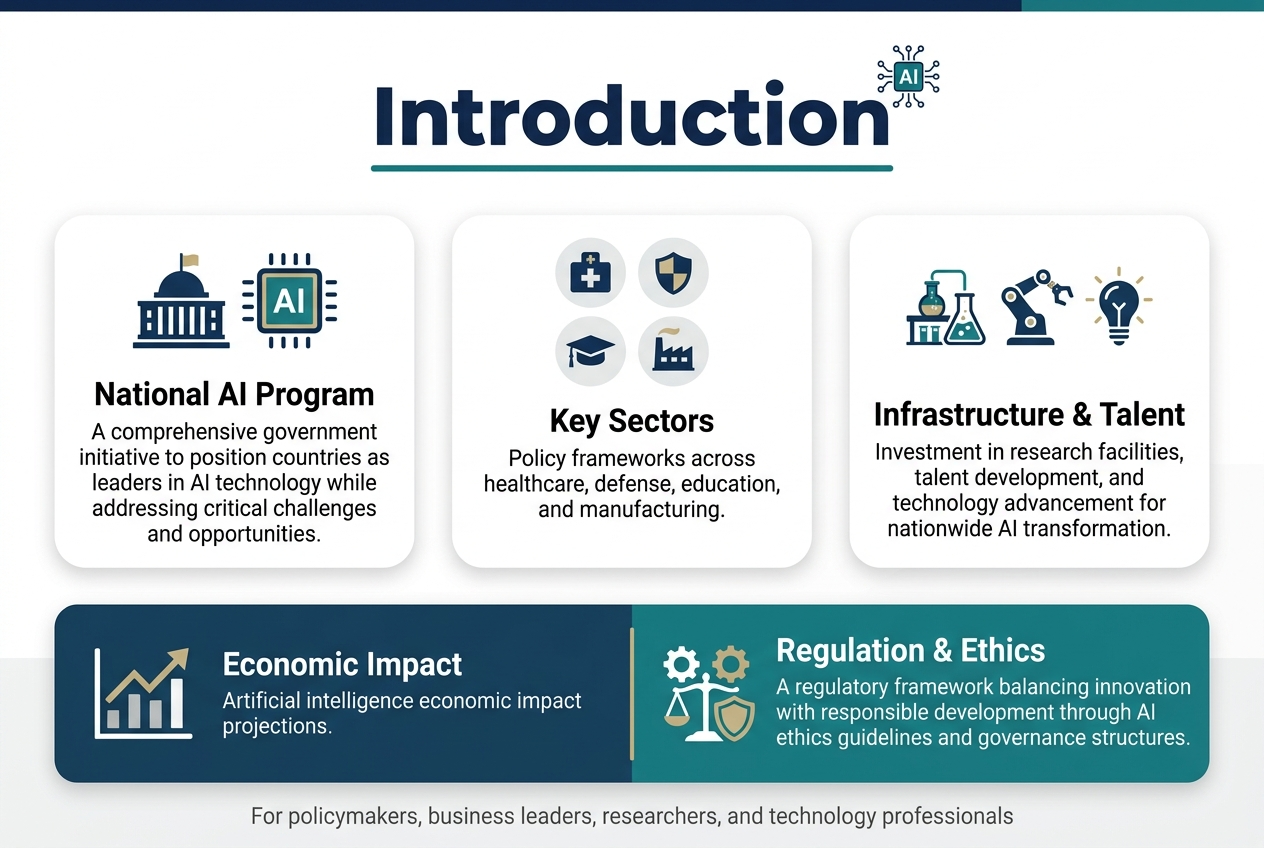
The National Program on Artificial Intelligence is a plan by the government to make the country a leader in Artificial Intelligence technology. This plan is made for people who make policies, business leaders, researchers and technology professionals who want to know how Artificial Intelligence can help the economy grow and make life better for people.
The National Artificial Intelligence Program makes rules for Artificial Intelligence policies in areas like healthcare, defense, education and manufacturing. We will look at how the program develops Artificial Intelligence infrastructure, like research facilities training for people and new technology to help the whole country use Artificial Intelligence.
We will also look at how Artificial Intelligence can affect the economy and how the rules for Artificial Intelligence can balance ideas with responsible development. This includes making sure Artificial Intelligence is used in a way that's fair and good for everyone.
Understanding National AI Program Fundamentals
Core objectives and strategic vision
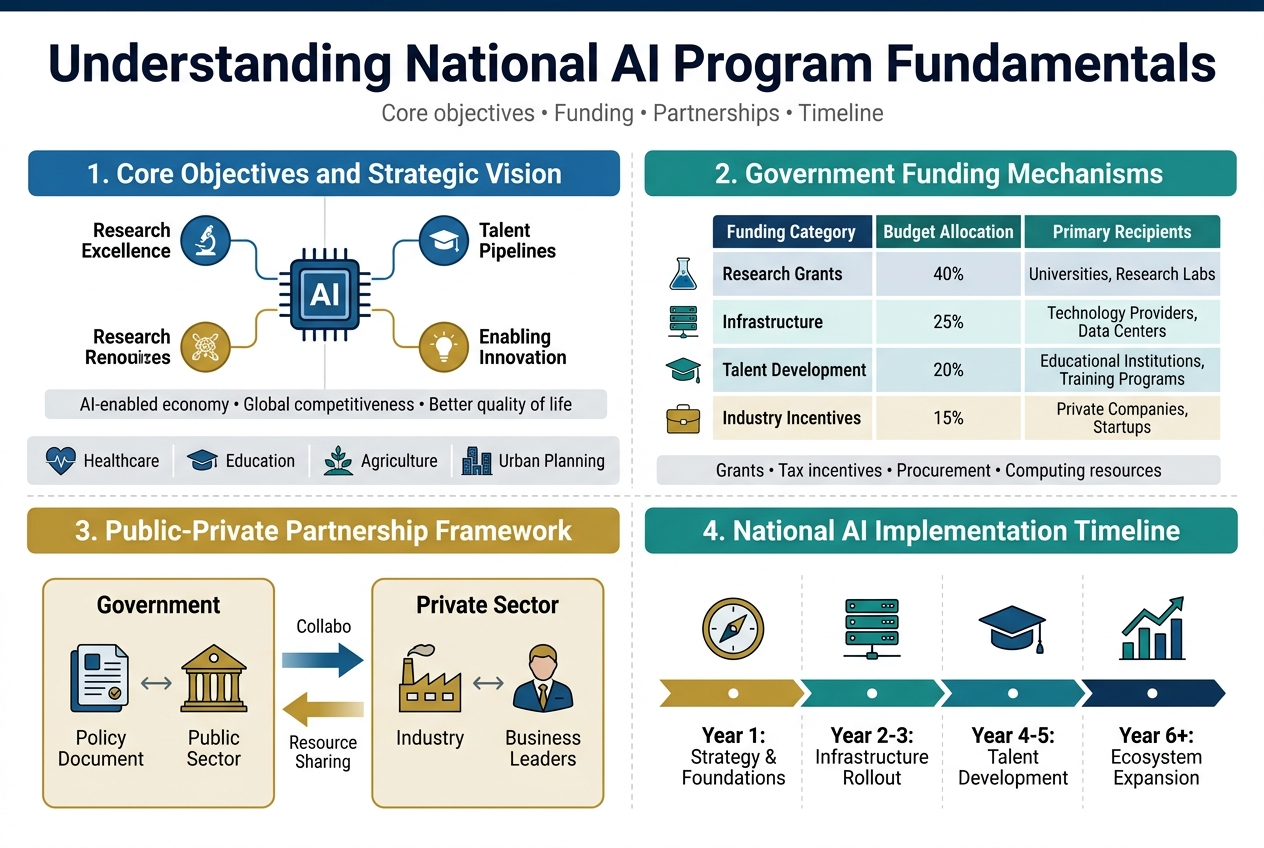
The main goal of the National Artificial Intelligence Program is to make the country a leader in Artificial Intelligence. The program wants to help Artificial Intelligence be used in areas and keep the country competitive in the technology world. The programs main goals are to make Artificial Intelligence research develop talented people and make it easy for new Artificial Intelligence ideas to happen.
The program is designed to help with technology needs and in the long term. The main focus areas are research, changing industries and helping society. The National Artificial Intelligence Program looks at technologies that can solve big problems in healthcare, education, agriculture and city planning.
Government Money and budget
The government gives money to the National Artificial Intelligence Program through channels. This money goes to research grants, new ideas and infrastructure projects. The budget is used for areas like basic Artificial Intelligence research developing talented people and critical infrastructure projects.
There are types of government money like grants for universities and research institutions tax breaks for Artificial Intelligence startups and buying policies that encourage Artificial Intelligence use in government services. The money also helps develop Artificial Intelligence infrastructure like computing resources, data centers and testing facilities.
| Funding Category | Budget Allocation | Primary Recipients |
|---|---|---|
| Research Grants | 40% | Universities, Research Labs |
| Infrastructure | 25% | Technology Providers, Data Centers |
| Talent Development | 20% | Educational Institutions, Training Programs |
| Industry Incentives | 15% | Private Companies, Startups |
The government has established dedicated funding bodies to oversee resource distribution and ensure alignment with national AI priorities. These organizations work closely with industry experts and academic leaders to identify the most promising research directions and commercial opportunities.
Partnership frameworks between public and private sectors
The government has groups that oversee how the money is used and make sure it aligns with the countrys Artificial Intelligence goals. These groups work with industry experts and academic leaders to find the promising research areas and business opportunities.
Working Together Between Public and Private Sectors
The Artificial Intelligence plan needs cooperation between the government and private companies. The partnership framework makes it easy for people to share knowledge, pool resources and share risks. This cooperation can be in the form of research projects or shared infrastructure initiatives.
The government and private companies work together on Artificial Intelligence development in areas where the government can help private companies with their innovation capabilities. Companies bring research and fast development while the government provides rules, public data and long-term vision.
The framework includes areas where companies can test Artificial Intelligence solutions in controlled environments with flexible rules. This helps businesses try technologies while helping policymakers understand new challenges and opportunities.
Timeline and implementation phases
The national Artificial Intelligence plan has phases that are designed to build capabilities step by step while keeping the focus on long-term goals. The first phase is about making infrastructure developing initial talented people and creating rules. This important work usually takes two to three years. Sets the stage for bigger initiatives.
The second phase is about expanding pilot programs using Artificial Intelligence in government services and starting big industry transformation projects. During this time the program shifts from research to use and commercialization. The timeline allows for improvements based on results and feedback from stakeholders.
The final phase is about becoming a leader in key Artificial Intelligence technologies while making sure everyone in society benefits. This advanced stage includes working with countries promoting exports and looking at the programs economic and social impact. Regular reviews ensure the national Artificial Intelligence strategy stays flexible and adapts to technologies and opportunities.
Key Focus Areas and Priority Sectors
Healthcare and Medical Research Applications
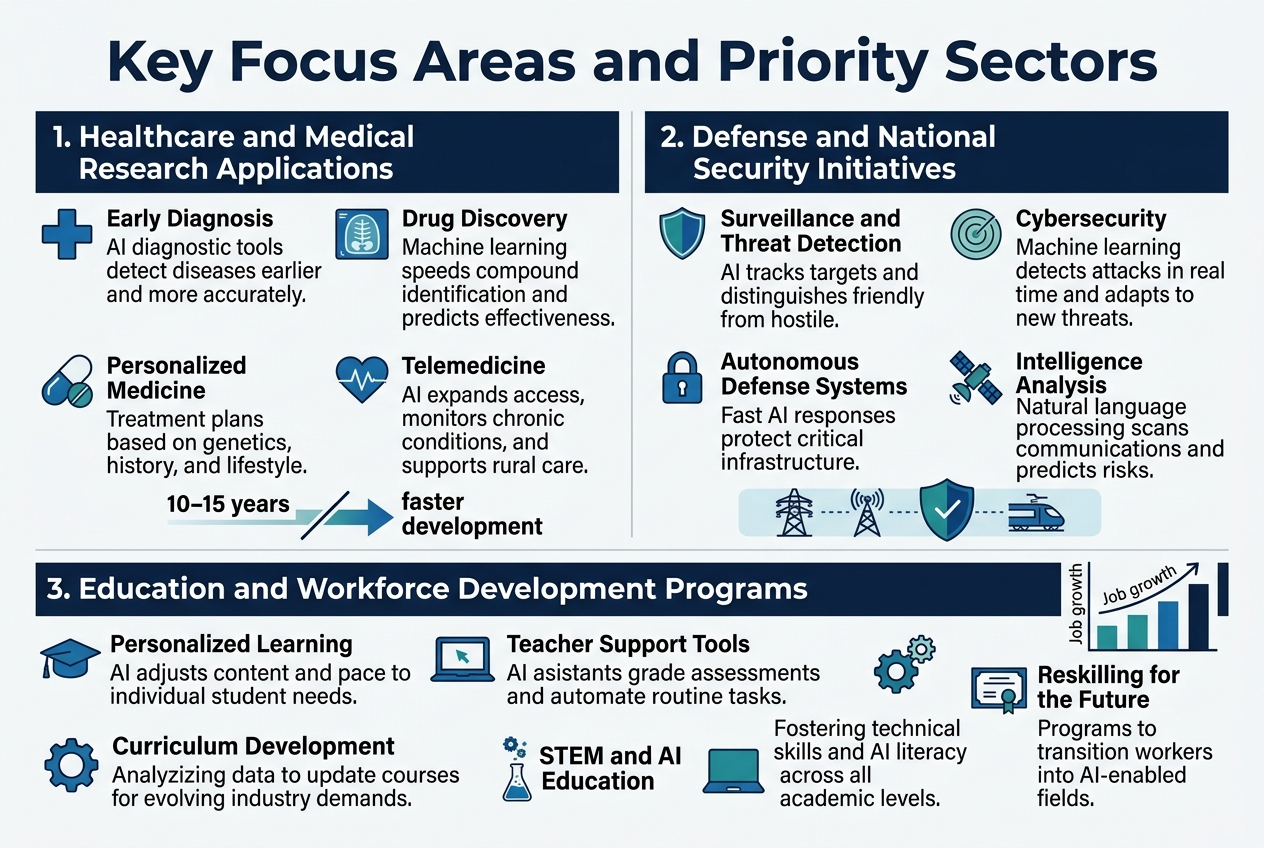
The National Artificial Intelligence Program thinks healthcare is one of the promising areas for Artificial Intelligence. Hospitals are already using Artificial Intelligence to diagnose diseases more accurately. Machine learning algorithms can look at images with precision that matches or is better than human doctors especially in finding early-stage cancers, heart problems and brain disorders.
Finding medicines is another important area where Artificial Intelligence is making a big difference. Pharmaceutical companies are using Artificial Intelligence to reduce the time it takes to develop medicines by finding promising compounds faster and predicting their effectiveness before clinical trials.
Personalized medicine is an area in healthcare Artificial Intelligence. Doctors can create treatment plans that are tailored to patients based on their genetic profiles, medical history and lifestyle factors. This approach has been very successful in cancer treatment, where Artificial Intelligence systems look at genetics to recommend the effective therapies while minimizing side effects.
Artificial Intelligence has also improved healthcare access to areas. Telemedicine platforms with Artificial Intelligence can provide diagnoses monitor chronic conditions remotely and alert healthcare providers when patients need immediate attention.
Defence and National Security Initiatives
The national Artificial Intelligence plan puts a lot of emphasis on maintaining superiority in defece applications. The military is using Artificial Intelligence in surveillance systems threat detection networks and strategic planning operations. Artificial Intelligence-powered radar systems can. Track multiple targets at the same time while distinguishing between friendly and hostile aircraft with unprecedented accuracy.
Cybersecurity is an area where Artificial Intelligence technology plays a defensive and offensive role. Government agencies are using machine learning algorithms to detect cyber attacks in real-time identifying patterns that human analysts might miss.
Autonomous defecse systems are being developed to protect infrastructure, including power grids, communication networks and transportation hubs. These Artificial Intelligence-driven systems can respond to threats faster than operators making split-second decisions that could prevent catastrophic damage to national infrastructure.
Intelligence analysis has been transformed through natural language processing capabilities that can look at amounts of data from multiple sources. Artificial Intelligence systems can translate communications identify potential security threats from social media activity and predict geopolitical events that could affect national interests.
Education and Workforce Development Programs
The artificial intelligence national strategy recognizes that educational transformation is essential for maintaining competitive advantages in the global AI landscape. Schools nationwide are implementing AI-powered personalized learning platforms that adapt to individual student needs, identifying knowledge gaps and adjusting instruction methods accordingly. These systems track student progress in real-time, providing teachers with detailed insights about which concepts require additional attention.
Vocational training programs are being redesigned to prepare workers for AI-enhanced industries. Community colleges and trade schools offer specialized courses in AI maintenance, data analysis, and human-machine collaboration. These programs focus on practical skills that complement artificial intelligence rather than compete with it, ensuring workers remain valuable in an automated economy.
University research initiatives supported by the National AI Program are producing the next generation of AI researchers and engineers. Graduate programs in artificial intelligence have expanded rapidly, with partnerships between academic institutions and technology companies providing students with hands-on experience in real-world AI applications.
Professional development programs help current workers transition into AI-related roles. Online platforms offer certification courses in machine learning, data science, and AI ethics, making advanced training accessible to professionals regardless of their location or schedule constraints. These initiatives help address the growing demand for AI-skilled workers while reducing unemployment in traditional industries affected by automation.
Teacher training programs ensure educators can effectively integrate AI tools into their classrooms while maintaining critical thinking skills that remain uniquely human. Professional development workshops teach teachers how to use AI assistants for lesson planning and assessment while helping students develop digital literacy skills essential for future careers.
Infrastructure Development and Technology Advancement
Research and Development Facility Establishment
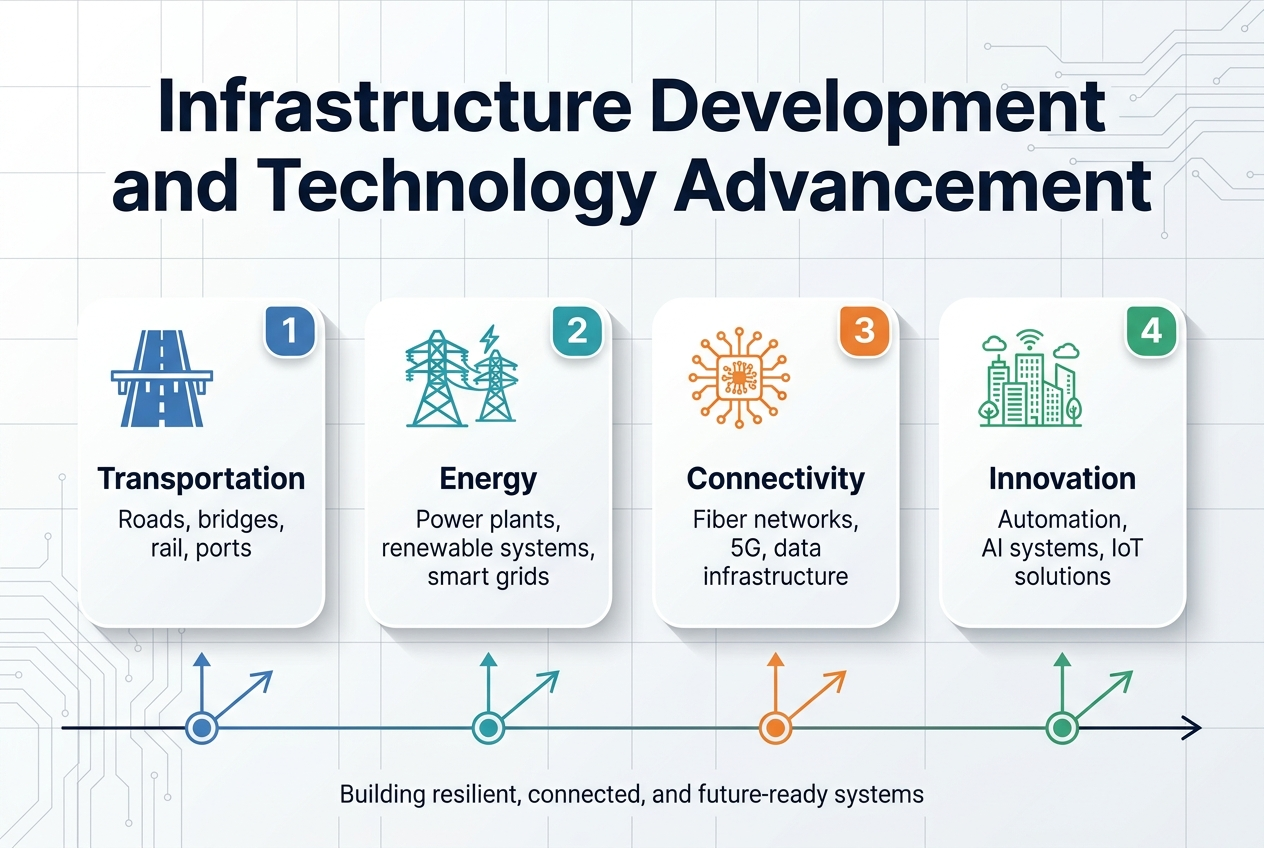
Building world-class research facilities forms the backbone of any successful National AI Program. These centre serve as innovation hubs where breakthrough technologies emerge and transform into practical applications. The establishment process requires careful planning around geographic distribution, ensuring major metropolitan areas and emerging tech corridors have adequate representation.
Modern AI research facilities need specialized infrastructure including clean rooms for hardware development, secure data centres for sensitive research, and collaborative spaces that encourage cross-disciplinary innovation. The most successful facilities integrate academic institutions, private sector partners, and government researchers under one roof, creating an ecosystem where knowledge flows freely between different stakeholders.
Funding models typically combine public investment with private partnerships, allowing facilities to maintain independence while accessing diverse revenue streams. Leading programs allocate significant portions of their budgets to equipment procurement, recognizing that cutting-edge research demands state-of-the-art tools and technologies.
High-Performance Computing Infrastructure
The computational demands of artificial intelligence research and deployment require massive processing power that traditional computing infrastructure simply cannot provide. National AI initiatives prioritize building supercomputing capabilities that can handle complex machine learning algorithms, process vast datasets, and support real-time AI applications across multiple sectors.
These systems demand specialized hardware including graphics processing units (GPUs), tensor processing units (TPUs), and emerging quantum computing technologies. Power requirements are substantial, with facilities often requiring dedicated electrical substations and advanced cooling systems to manage heat generation from intensive computational workloads.
Cloud computing integration plays a crucial role, allowing researchers and businesses nationwide to access high-performance resources without requiring local supercomputing installations. This democratization of computing power enables smaller organizations and startups to participate in AI innovation, accelerating overall program effectiveness.
Data Governance and Digital Infrastructure
Effective data governance creates the foundation for trustworthy AI development while protecting citizen privacy and national security interests. National programs establish comprehensive frameworks covering data collection, storage, processing, and sharing protocols that balance innovation needs with security requirements.
Digital infrastructure development focuses on creating secure, high-speed networks capable of supporting AI applications across diverse sectors. This includes upgrading telecommunications networks, establishing data centers with robust cybersecurity measures, and implementing interoperability standards that allow seamless data exchange between systems.
Privacy-preserving technologies like differential privacy and federated learning enable valuable research while protecting sensitive information. These approaches allow organizations to collaborate on AI development without exposing proprietary data or personal information.
International Collaboration Networks
Global partnerships accelerate AI research and development while ensuring national programs remain connected to international best practices. Collaboration agreements facilitate researcher exchanges, joint projects, and shared access to specialized facilities and datasets.
Strategic partnerships focus on complementary strengths, allowing countries to specialize in specific AI domains while benefiting from partners' expertise in other areas. These relationships often extend beyond research to include standards development, ethical guidelines, and regulatory harmonization efforts.
International networks also serve as early warning systems for emerging challenges, enabling rapid response to AI safety concerns, security threats, and ethical dilemmas that transcend national boundaries.
Talent Acquisition and Retention Strategies
Building a skilled AI workforce requires comprehensive strategies addressing education, immigration, and professional development. National programs typically invest heavily in university partnerships, scholarship programs, and specialized training initiatives designed to expand the domestic talent pool.
Immigration policies play a critical role, with successful programs streamlining visa processes for international AI researchers and establishing pathways to permanent residency for top talent. Retention strategies include competitive compensation packages, research funding opportunities, and career development programs that keep experts engaged in national priorities.
Industry partnerships create pathways between academic training and practical application, ensuring graduates possess skills that match real-world demands while providing companies with access to emerging talent.
Regulatory Framework and Ethical Guidelines
AI Ethics and Responsible Development Standards
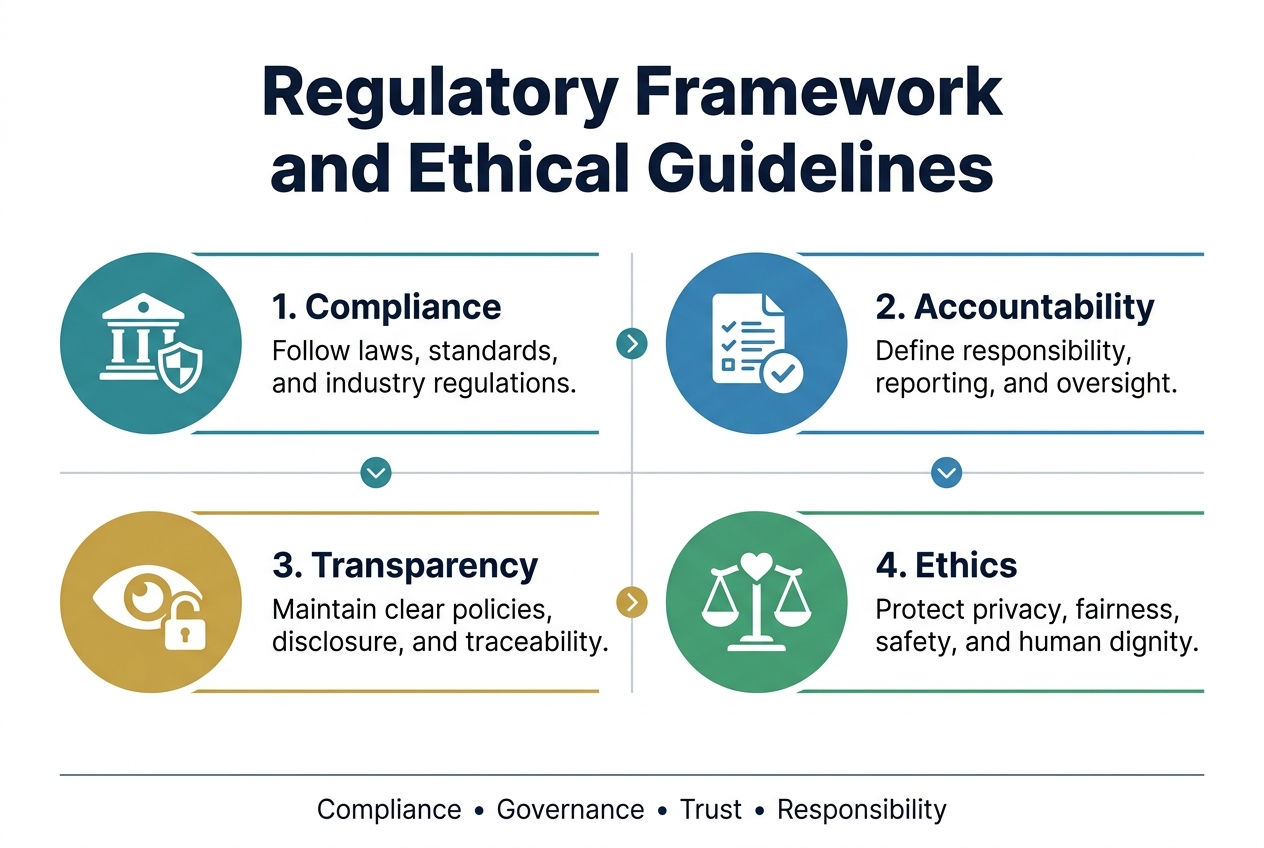
National AI programs worldwide recognize that artificial intelligence development must go hand-in-hand with strong ethical foundations. The AI ethics guidelines within national frameworks establish clear principles for responsible AI development, focusing on fairness, transparency, and human-centered design. These standards require developers and organizations to build AI systems that avoid bias, respect human rights, and promote social good.
Most national AI programs mandate impact assessments before deploying AI systems in critical sectors like healthcare, finance, and criminal justice. These assessments evaluate potential risks, unintended consequences, and societal impacts. Development teams must document their decision-making processes, data sources, and algorithmic choices to ensure accountability throughout the AI lifecycle.
The responsible development standards also address algorithmic fairness, requiring regular audits to identify and eliminate discriminatory outcomes. Organizations must implement testing protocols that examine how AI systems perform across different demographic groups, geographic regions, and socioeconomic backgrounds. This proactive approach helps prevent AI systems from perpetuating or amplifying existing societal inequalities.
Training and education components ensure that AI developers, policymakers, and end-users understand their responsibilities. Many national AI programs include mandatory ethics training for AI professionals and establish certification programs that validate competency in responsible AI development practices.
Privacy Protection and Data Security Measures
Data protection forms the cornerstone of national AI regulatory frameworks, with comprehensive measures designed to safeguard personal information throughout AI development and deployment processes. National AI programs typically incorporate existing privacy laws while adding AI-specific protections that address unique challenges posed by machine learning systems.
Key privacy protection measures include:
Data minimization requirements that limit collection to necessary information only
Purpose limitation rules preventing data use beyond stated objectives
Consent management systems ensuring clear, informed user agreement
Right to explanation mechanisms allowing individuals to understand AI decisions affecting them
Data portability provisions enabling users to access and transfer their information
Security measures within national frameworks establish mandatory cybersecurity standards for AI systems. These include encryption requirements for data at rest and in transit, secure coding practices for AI applications, and regular security audits. Organizations must implement robust access controls, ensuring only authorized personnel can access sensitive AI training data and model parameters.
National AI programs often require organizations to maintain detailed audit trails showing how personal data flows through AI systems. This includes tracking data sources, processing methods, storage locations, and sharing arrangements. Regular compliance assessments verify that organizations meet these security standards and can demonstrate proper data handling practices.
Breach notification requirements ensure rapid response when security incidents occur. Organizations must report data breaches to relevant authorities within specified timeframes and notify affected individuals when their personal information is compromised.
Transparency and Accountability Mechanisms
Transparency requirements in national AI frameworks ensure that AI systems remain understandable and accountable to users, regulators, and society. These mechanisms create clear lines of responsibility and enable effective oversight of AI deployment across different sectors.
Algorithmic transparency mandates vary by application domain, with higher-risk sectors like healthcare and criminal justice requiring more detailed disclosures. Organizations must provide clear explanations of how their AI systems make decisions, what data influences outcomes, and how accuracy is measured and maintained.
Documentation requirements include:
| Documentation Type | Content Requirements | Update Frequency |
|---|---|---|
| Model Cards | Performance metrics, limitations, intended use | With each model version |
| Data Sheets | Data sources, collection methods, known biases | Annually or when data changes |
| Impact Assessments | Risk analysis, mitigation strategies, monitoring plans | Before deployment and annually |
| Audit Reports | Compliance verification, performance evaluation | Semi-annually |
Accountability mechanisms establish clear chains of responsibility for AI system outcomes. Organizations must designate responsible individuals for AI governance, create internal review boards for high-risk applications, and maintain insurance coverage for AI-related liabilities.
External oversight bodies, often established within national AI programs, conduct independent assessments of AI systems in critical applications. These bodies have authority to investigate complaints, conduct audits, and impose penalties for non-compliance with national AI standards.
International Compliance and Standards Alignment
National AI programs increasingly recognize the need for international coordination and standards alignment to facilitate cross-border AI development and deployment. This alignment ensures that domestic AI systems can operate globally while maintaining consistent ethical and safety standards.
International standards alignment focuses on several key areas. Technical standards harmonization ensures AI systems developed under national programs can interoperate with systems from other countries. This includes adopting common data formats, communication protocols, and performance measurement methodologies established by international organizations like ISO and IEEE.
Cross-border data governance frameworks enable secure and compliant international AI collaborations. National AI programs establish mutual recognition agreements with partner countries, allowing data sharing for AI research and development while maintaining privacy protections. These agreements specify acceptable data transfer mechanisms, joint oversight procedures, and dispute resolution processes.
Regulatory sandboxes and pilot programs often include international components, allowing organizations to test AI systems across multiple jurisdictions simultaneously. These programs help identify regulatory gaps and harmonization opportunities while providing valuable insights for policy development.
Many national AI programs participate in multilateral initiatives like the Global Partnership on AI, OECD AI principles, and UNESCO AI ethics frameworks. This participation ensures domestic policies align with emerging international consensus while contributing national expertise to global AI governance discussions.
Trade considerations play a significant role in international compliance efforts. National AI programs must balance domestic priorities with international trade obligations, ensuring AI regulations don't create unnecessary barriers to commerce while maintaining appropriate safety and ethical standards.
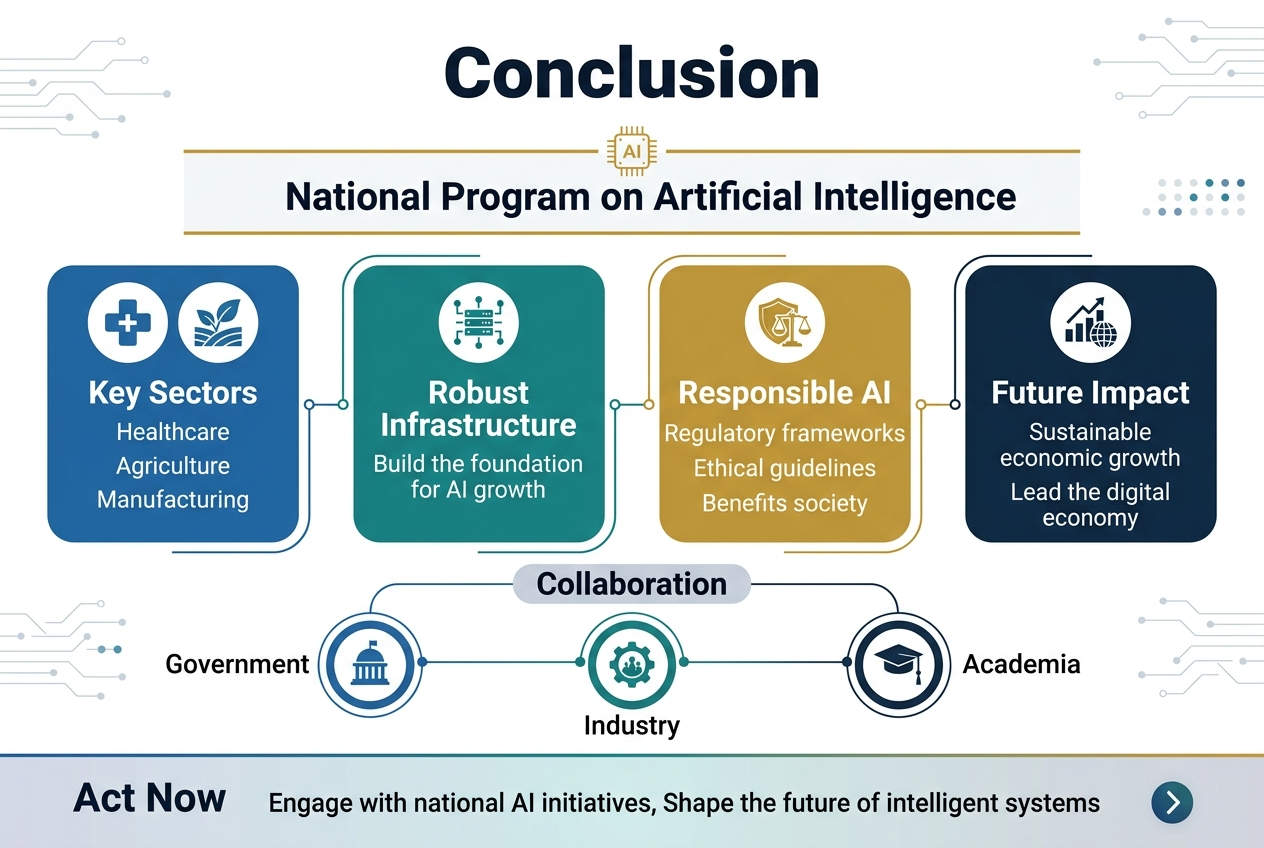
The National Program on Artificial Intelligence represents a game-changing approach to positioning countries at the forefront of technological innovation. By focusing on key sectors like healthcare, agriculture, and manufacturing while building robust infrastructure, these programs create a foundation for sustainable economic growth. The emphasis on regulatory frameworks and ethical guidelines ensures that AI development remains responsible and benefits society as a whole.
Countries that embrace comprehensive AI strategies today will lead tomorrow's digital economy. The success of these programs depends on collaboration between government, industry, and academia to create an ecosystem where innovation thrives. If you're involved in policy-making, business strategy, or technology development, now is the time to engage with your national AI initiatives and contribute to shaping the future of intelligent systems in your country.